Lei Etiquette in Hawaiʻi: Give and Receive With Care
- Lei are gifts, not costume inventory
- Learn the word with the practice
- Giving begins with consent
- Receiving does not require silent discomfort
- Wear it without dismantling it
- Removing a lei can be respectful
- Pregnancy customs need context, not enforcement
- Ask what the lei is made from
- Store fresh lei according to material
- Disposal is an environmental decision too
- Do not leave lei at sites without permission
- Airport lei greetings are services, not ancient theatre
- Bring the same care to shared places
- A simple approach that travels well
Lei are gifts, not costume inventory
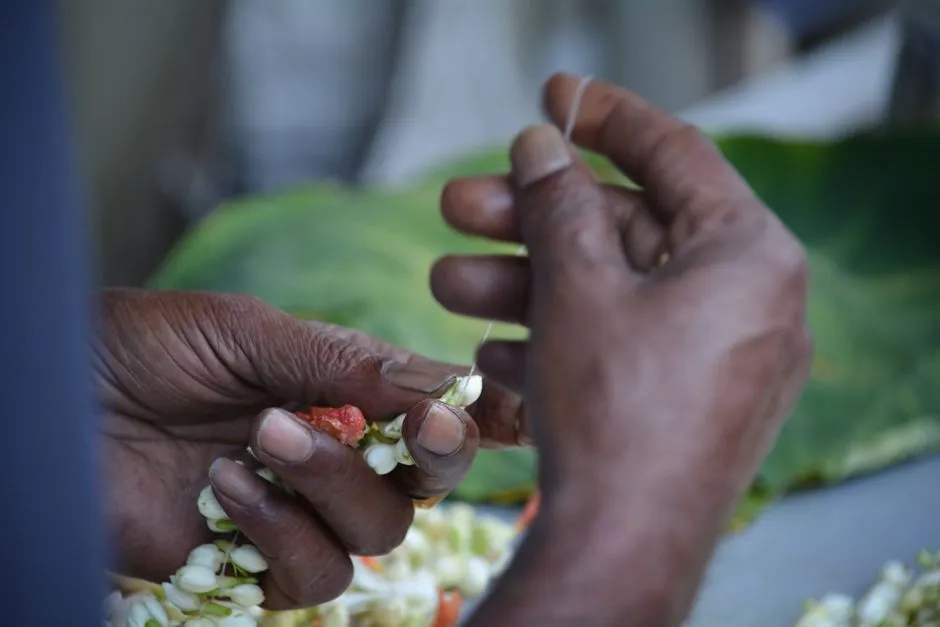
Lei can be made from flowers, leaves, seeds, shells, feathers, fiber, fabric, paper, food, money, and other materials. They may mark welcome, farewell, graduation, birthday, achievement, remembrance, affection, ceremony, or relationship to place.
That range is the first etiquette lesson. A lei is not one universal object with one universal script. Family, community, island, material, maker, occasion, and protocol matter.
Treat lei as meaningful gifts. Ask before placing one on someone. Receive with attention. Handle with care. When you do not know what a specific occasion calls for, ask the host or maker instead of consulting a tourist commandment written in all caps.
The Hawaiʻi Tourism Authority's customs overview distinguishes Native Hawaiian traditions from contemporary local customs and describes how Hawaiʻi's shared local culture developed. This independent guide offers a starting point, not authority over anyone's practice.
Learn the word with the practice
Lei is the Hawaiian word. In ʻōlelo Hawaiʻi, number is conveyed by surrounding words rather than adding an English s to the noun. English speakers commonly say leis, but using lei for one or more is a respectful and easy habit when discussing Hawaiian practice.
Pronounce and spell Hawaiian words carefully. Our Hawaiian place-name pronunciation guide explains ʻokina, kahakō, and why an authoritative recording is better than a confident guess.
Do not use Hawaiian terms merely to make an event sound tropical. If you do not know what a word means in context, keep researching.
Giving begins with consent
Before moving into someone's personal space, ask or signal clearly. You can offer the lei in both hands and let the recipient choose how to receive it. At a ceremony, follow the organizer or knowledgeable participant.
Contemporary presentations are often made by lowering lei over the head, but Go Hawaiʻi notes that traditional presentation respected the sacredness of a person's head and back and could involve tying rather than casting it over the head. That history is a good reason not to swoop from behind like an affectionate airport crane.
Account for mobility, hair, headwear, hearing devices, scent sensitivity, allergies, religious practice, clothing, and comfort. A hand presentation may be more appropriate. Children should not be compelled to accept touch from an unfamiliar person for a photograph.
Say who the lei is from and why it is being given. The relationship and intention matter more than a rehearsed speech.
Receiving does not require silent discomfort
If you can wear the lei comfortably, accept it gently and acknowledge the giver. Do not immediately toss it over a bag, hand it to an assistant, or rearrange it solely for the camera before recognizing the person.
If you cannot wear it, explain briefly. Allergies, asthma, scent sensitivity, health, religious practice, work, and personal boundaries are real. Receive it by hand if appropriate or ask where it can be placed.
There is no need for a public debate titled “Is Refusing a Lei Always Rude?” Consent and care are better tools than absolutes. A considerate giver should not want the recipient in respiratory distress for the sake of symbolism.
At a formal event, ask discreetly about protocol. Some lei are intended for a specific moment, person, or role and should not be passed around as props.
Wear it without dismantling it
A neck lei usually rests across the shoulders and chest rather than hanging entirely down the back. A lei poʻo is worn around the head; haku describes a braiding or plaiting construction method, not a placement category. Construction and intended placement both matter. Do not assume every circular piece belongs around the neck.
Handle flowers and leaves lightly. Keep lei away from food spills, open flame, rough bag straps, and anything that crushes it. Do not pull out a flower because its color improves a cocktail photograph.
Some lei are heavy, fragile, prickly, scented, or made from materials that should remain dry. Ask the maker how to wear and care for it.
If several lei are given at a graduation or celebration, the recipient may need help for visibility, breathing, heat, and movement. Tradition does not require obscuring a person's entire face under horticultural affection.
Removing a lei can be respectful
You may need to remove a lei because of heat, allergy, work, eating, driving, activity, sleep, or comfort. Do it carefully. Place it on a clean surface, in a suitable container, or where it can be displayed.
When a lei must be removed, this guide recommends enjoying or displaying it where appropriate rather than dropping it on the floor or directly into the trash. The gift still deserves care when it is no longer on your body.
If the event has a particular protocol, ask. Do not police another recipient's choice without knowing their circumstances.
Pregnancy customs need context, not enforcement
Some contemporary guidance describes giving an open-ended lei rather than a closed lei during pregnancy, relating the closed circle to the umbilical cord. Practices and beliefs vary.
If giving lei to a pregnant person, ask them and the lei maker what is appropriate. Do not surprise the recipient with a lecture, diagnose symbolism, or treat one custom as a universal prohibition. Consent, material safety, scent sensitivity, and the recipient's own practice come first.
This is exactly where a rigid etiquette list performs poorly: it can turn care into surveillance.
Ask what the lei is made from
Materials determine storage, lifespan, travel rules, and disposal. A fresh flower lei may need cool humid storage; a shell lei should remain dry; a feather lei may require specialist care; a candy or money lei has food, choking, security, and handling considerations.
Some plants, shells, feathers, and wildlife products are protected or regulated. Agricultural rules govern what can travel between islands, to the continental United States, or internationally. Check current official agriculture and customs requirements before packing lei. Do not assume airport presentation means airport export permission.
Buy from responsible makers. Ask about source when protected or sensitive material could be involved. “Natural” is not a chain-of-custody document.
Store fresh lei according to material
Ask the maker first. Many fresh lei benefit from cool storage with gentle humidity, but some flowers discolor in cold temperatures or react badly to direct water.
General steps may include:
- keeping the lei out of sun and hot cars;
- handling it as little as possible;
- placing it loosely in an appropriate container;
- using a barely damp towel only if suitable for that plant; and
- preventing crushing by food or luggage.
Do not seal a soaking-wet lei in plastic and hope culture defeats mold. Specific plant knowledge wins.
Disposal is an environmental decision too
Returning natural material to earth can sound respectful, but doing so in the wrong place can spread seeds, pests, wire, plastic, dye, or nonnative plants. Do not leave lei at a beach, trail, overlook, cultural site, memorial, statue, or park without permission.
First separate noncompostable materials such as pins, staples, wire, ribbon, plastic thread, batteries, money, candy wrappers, or synthetic backing. Follow local waste and compost rules. If plant origin is uncertain or invasive material may be present, responsible trash disposal may be safer than outdoor scattering.
Never throw lei into the ocean. Organic material is still introduced material, and attached components can harm wildlife. A poetic gesture does not receive an environmental exemption.
You can also dry suitable flowers, photograph the lei, or ask the maker about preservation.
Do not leave lei at sites without permission
Visitors sometimes place lei on monuments, graves, statues, heiau, trees, or other places they perceive as significant. That can be inappropriate, prohibited, damaging, or burdensome to caretakers.
Offerings belong within relationships and protocols, not a visitor's improvised idea of authenticity. Do not enter restricted areas, move existing offerings, attach anything to structures, or copy a practice you do not understand.
If you want to honor a place, learn its name and history, follow access rules, support its caretakers, and leave it physically unchanged.
Airport lei greetings are services, not ancient theatre
Commercial lei greetings can be a warm contemporary welcome. They are not proof that every arriving visitor is participating in one timeless ceremony unchanged across history.
Confirm who will meet whom, spelling of names, timing, allergies, mobility needs, and what happens during delays. Ask about materials and disposal. Tip or pay according to the service terms rather than inventing a local expectation.
Most importantly, let the greeting center the people meeting, not a reenactment designed for social media.
Bring the same care to shared places
Etiquette is not confined to gifts. Use the Hawaiʻi beach packing list to reduce trash and contact with reef. Follow Hawaiʻi ocean-safety guidance rather than expecting local rescuers to absorb a preventable itinerary decision.
Learn before naming a party, rental, product, or package with a Hawaiian word. Support Native Hawaiian and local makers without claiming their identity or knowledge as your own.
A simple approach that travels well
When giving: know the source, ask consent, explain the occasion, and follow the recipient's lead.
When receiving: acknowledge the giver, handle the lei carefully, and state any need honestly.
When removing: place it respectfully and ask about care.
When finished: separate materials and dispose without littering, spreading plants, or leaving unauthorized offerings.
The point is not to memorize enough rules to become the group's self-appointed lei police. It is to notice the person, the material, the place, and the context. Etiquette becomes much easier once the gift is allowed to be more important than the visitor's performance of knowing what to do.